Dol Yatra and Holi: Traditional Spring Celebration Stories
Discover Dol Yatra and Holi: Divine spring festival celebrations featuring colorful traditions, family gatherings, sacred rituals & vibrant cultural stories from India.
CHRONICLES OF BHARAT
The Divine Legend
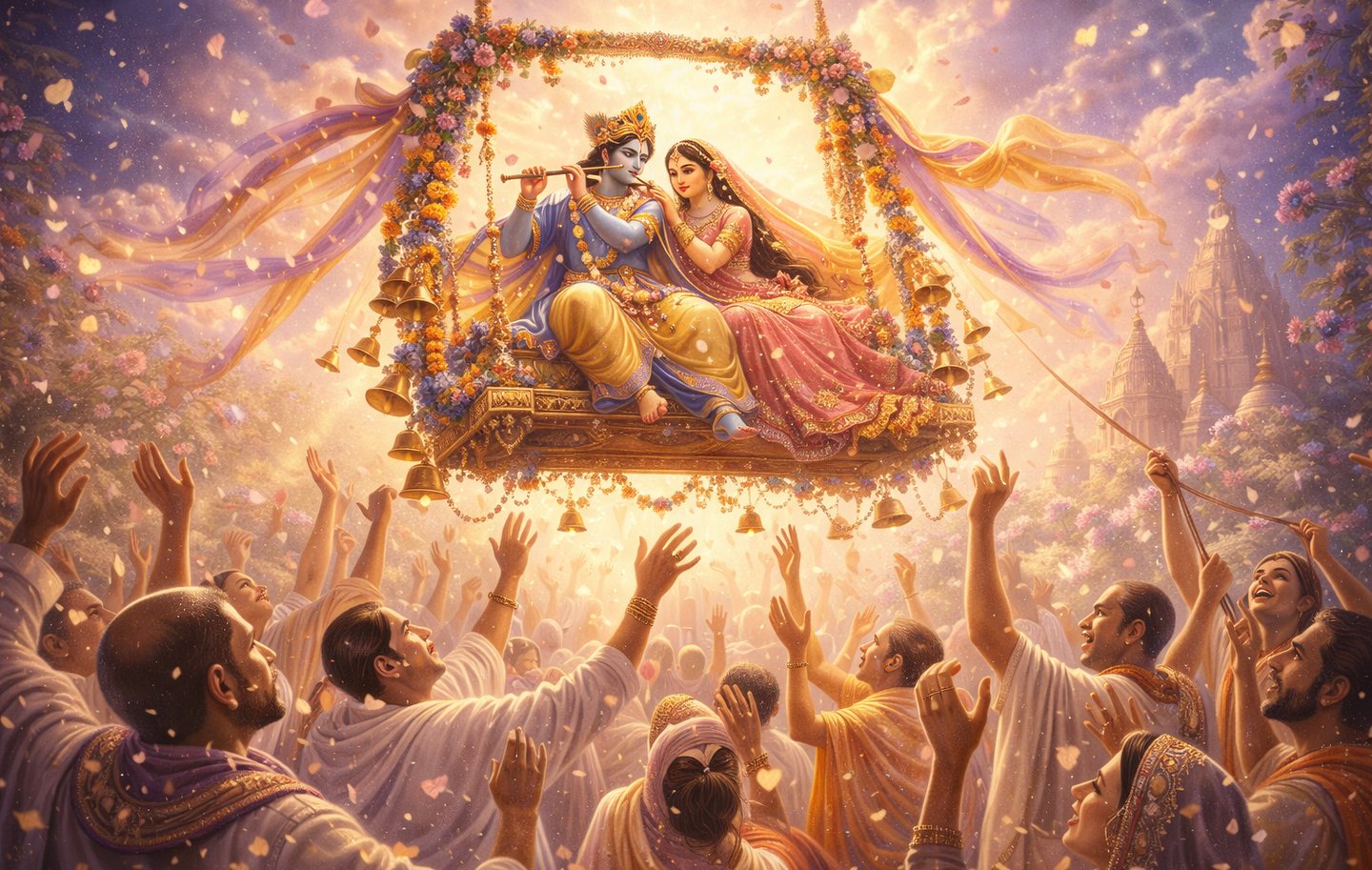
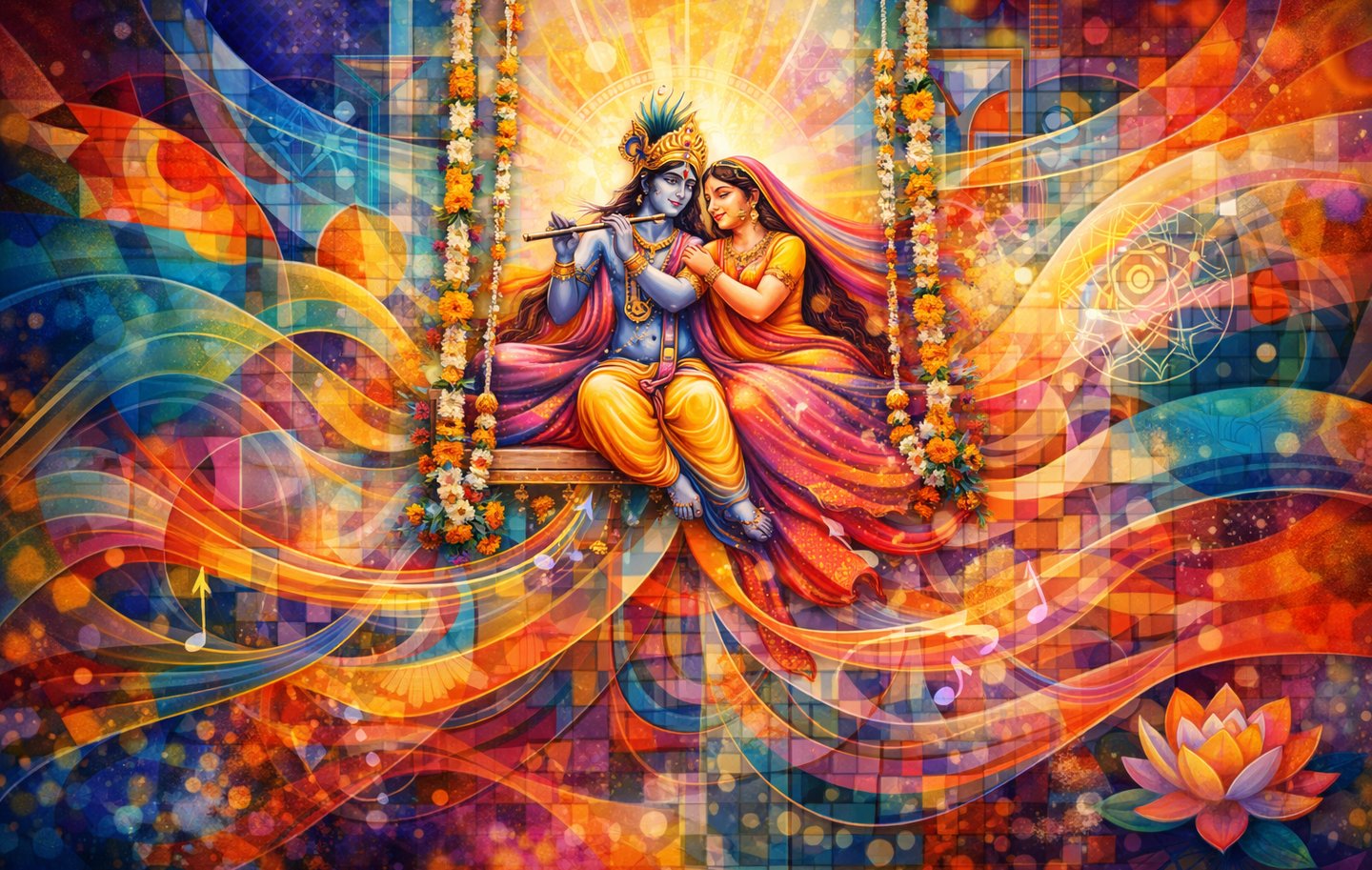
In the sacred tales of Bharat, Dol Yatra emerges from the eternal love story of Radha and Krishna. This spring festival celebrates the divine romance that transcends mortals and immortals alike, painting the heavens with colors of joy and devotion. The word "Dol" comes from the Sanskrit term meaning "to swing," and "Yatra" means a journey or pilgrimage—together, it is the journey of swinging the deities in celebration of renewal.
Legend speaks of how Krishna, in his youthful mischief, playfully applied colors to the gopis (milkmaids), turning them into a symphony of hues. What began as divine mischief became an eternal custom—Dol Yatra is the world's joyful reenactment of this celestial play, celebrated across the regions of Bengal, Assam, Orissa, and beyond.
"The swinging of the Lord in spring symbolizes the triumph of love over ego, the victory of good over evil, and the awakening of nature from winter's slumber."
Timeless Traditions Unfold
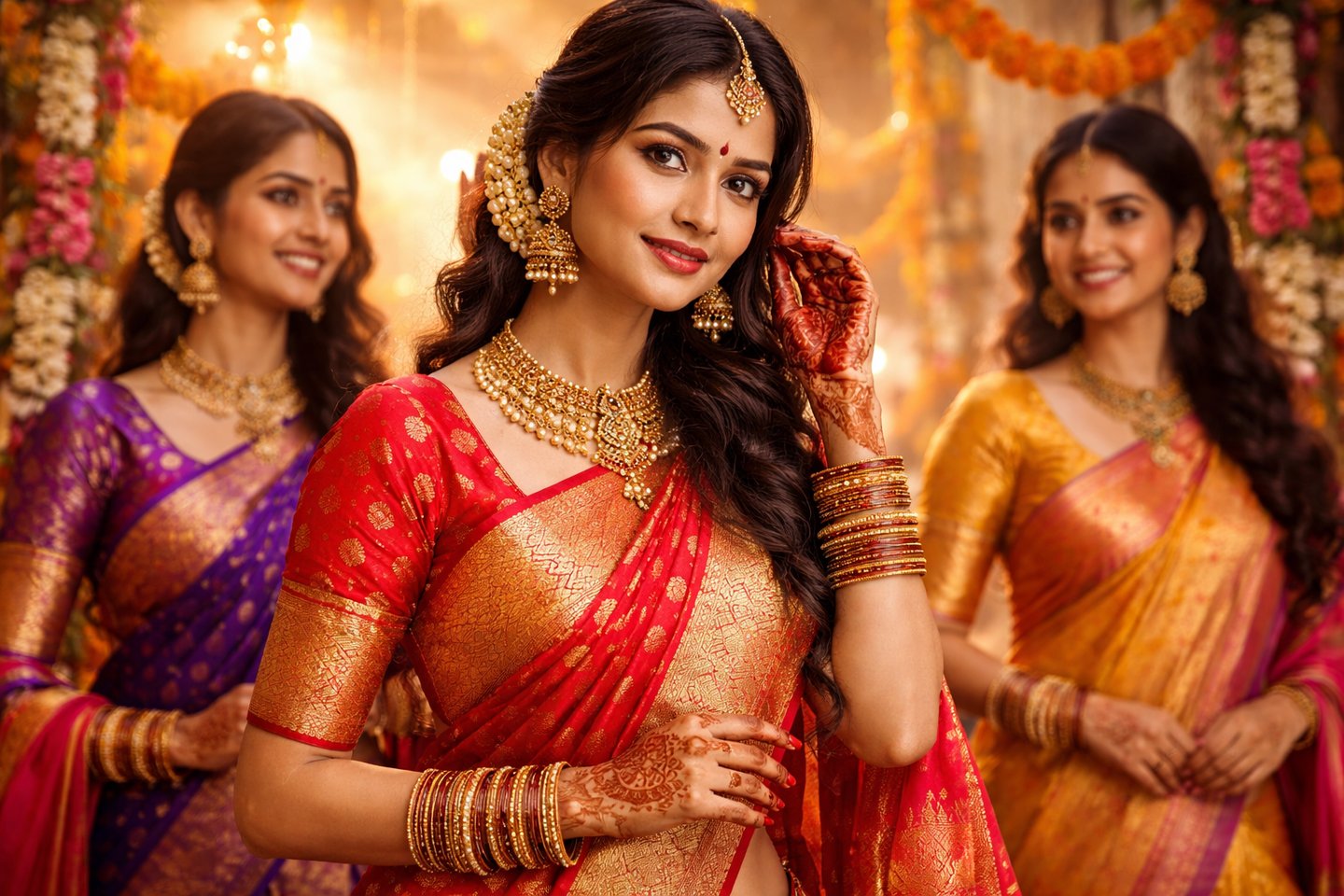
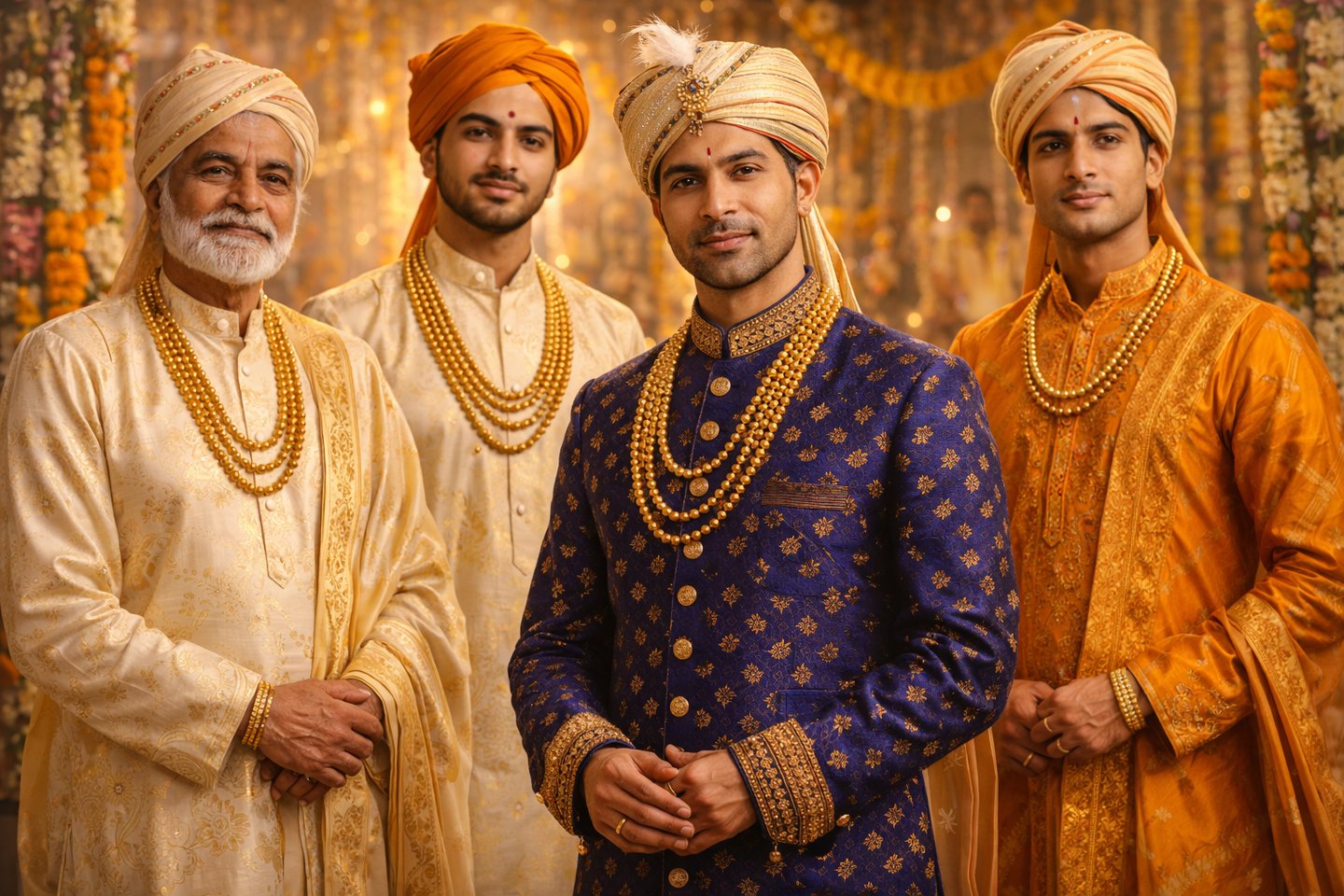
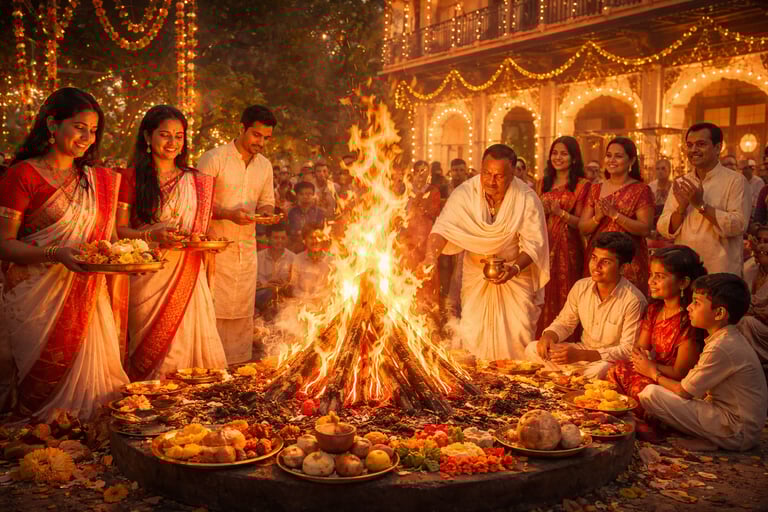
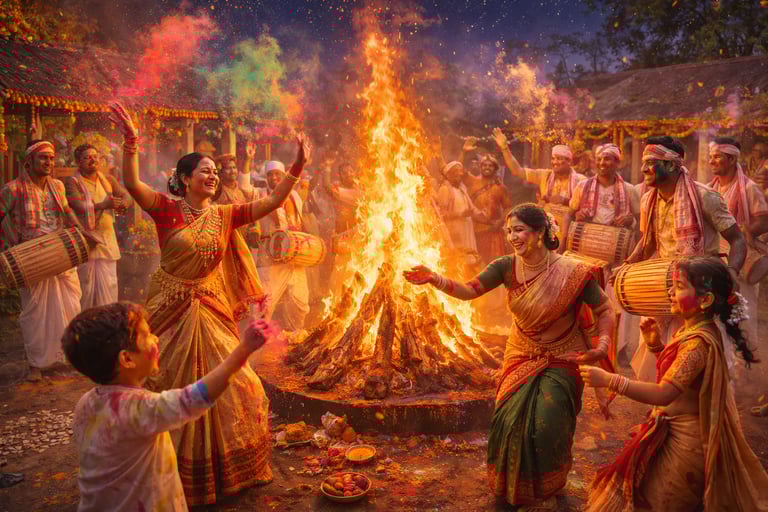
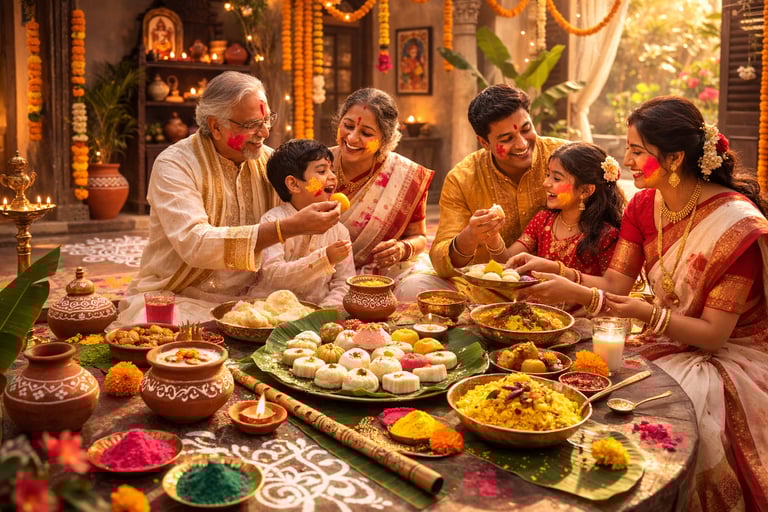
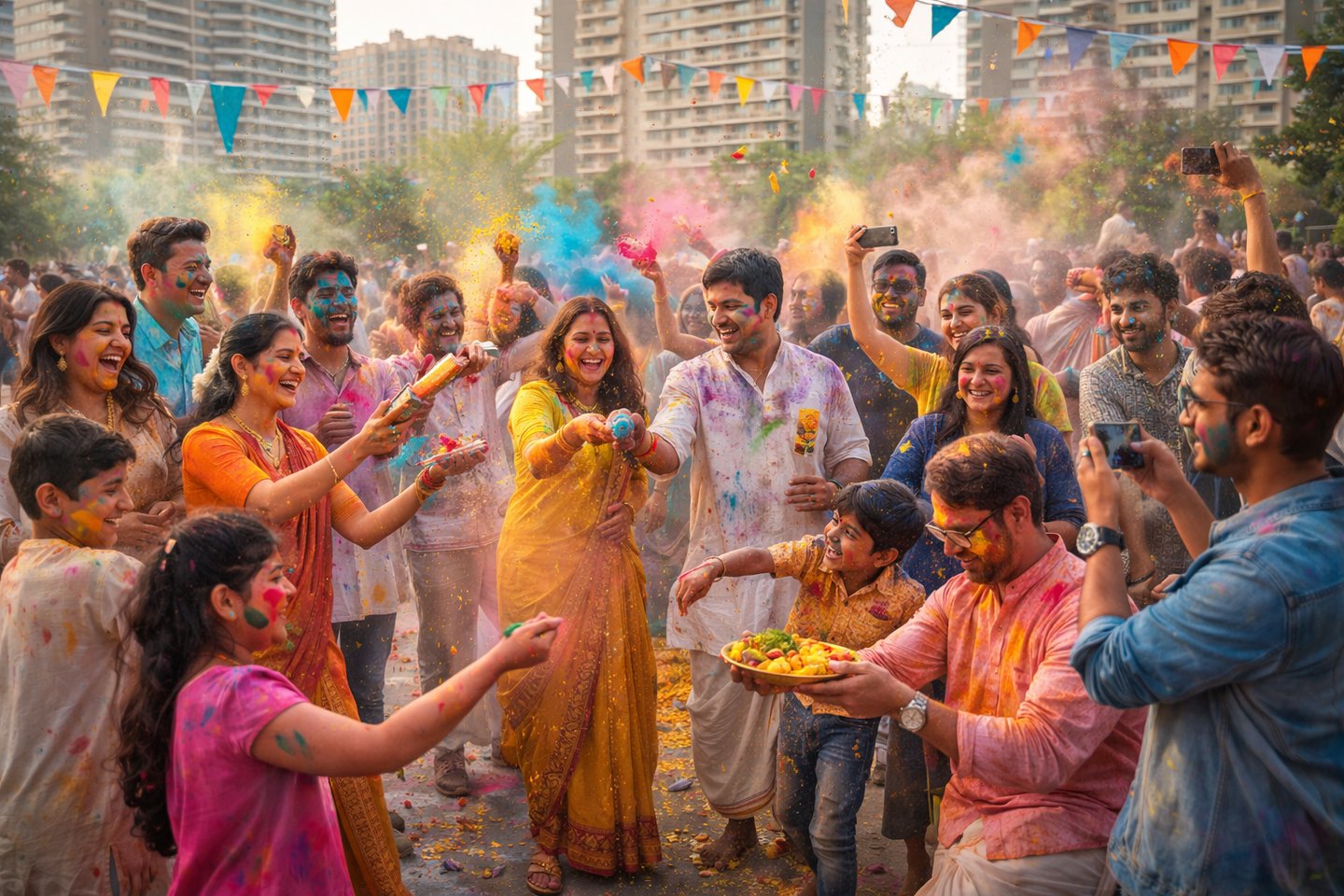
As dawn breaks on the day of Dol Yatra, homes transform into temples of celebration. The air fills with the sounds of dhols (drums) and the laughter of children. Women dress in vibrant sarees adorned with gold, their wrists jingling with bangles of every hue. Men prepare for the grand processions that will wind through villages and cities alike.
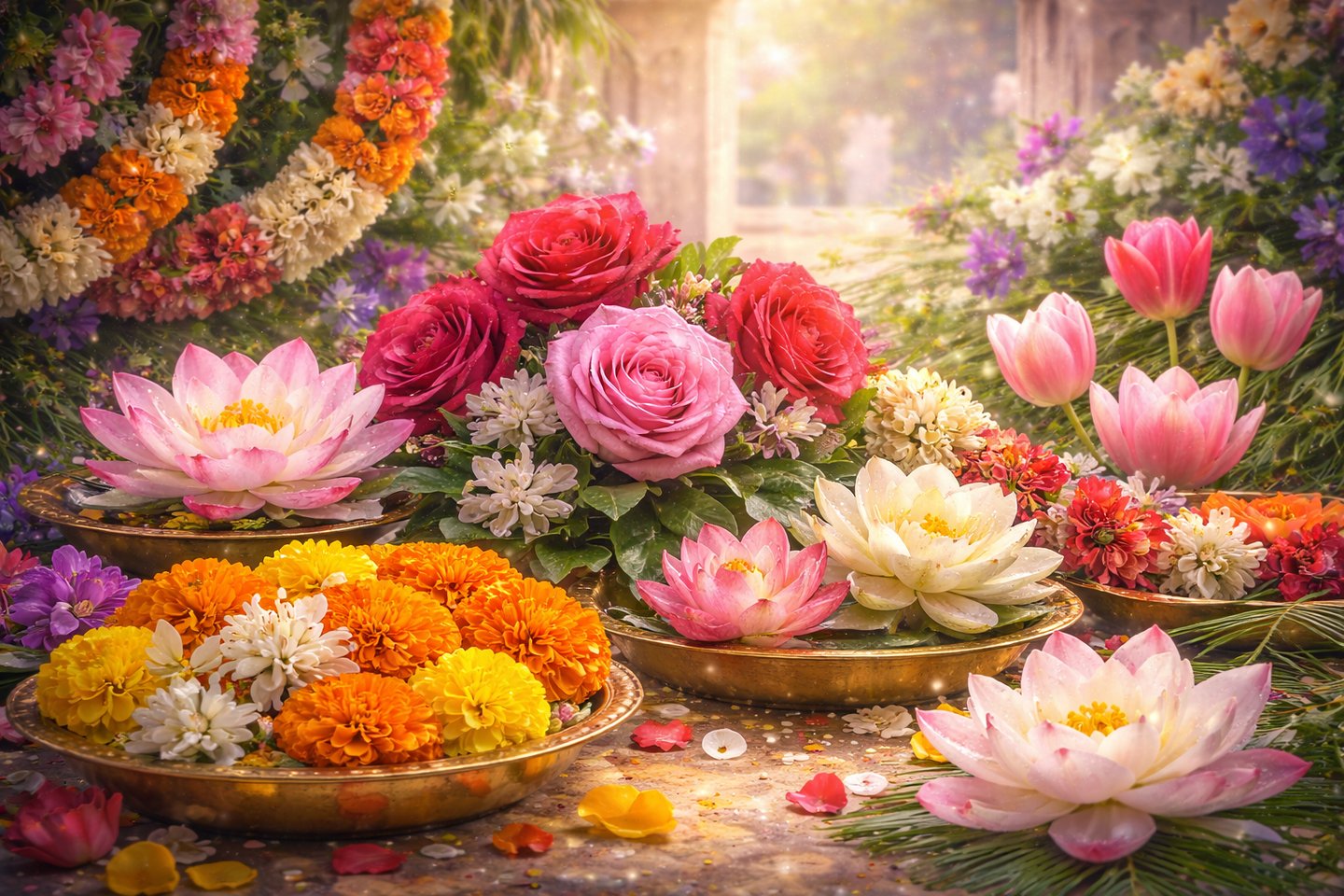
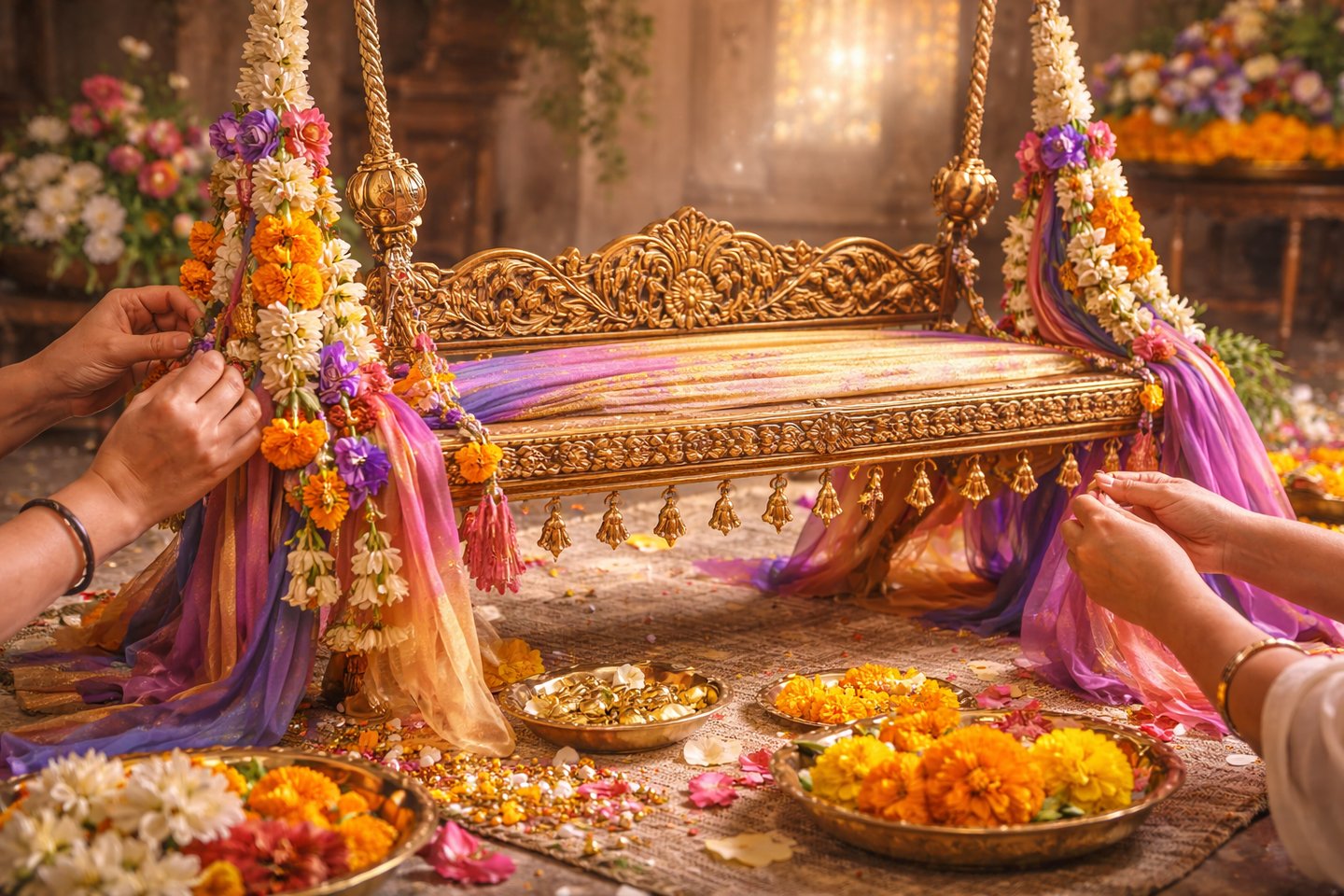
The centerpiece of Dol Yatra is the "Dol" itself—an elaborately decorated swing, often made of wood or bamboo, festooned with flowers, colorful cloth, and melodious bells. Here, idols of Radha and Krishna are placed, and they are ceremonially swung while devotees sing ancient songs of devotion and love. The rhythmic swinging represents the eternal dance of the divine couple.
🌅Early Morning Rituals
Bathing, dressing in new clothes, and preparing the homes with flowers and decorations
🎨The Festival of Colors
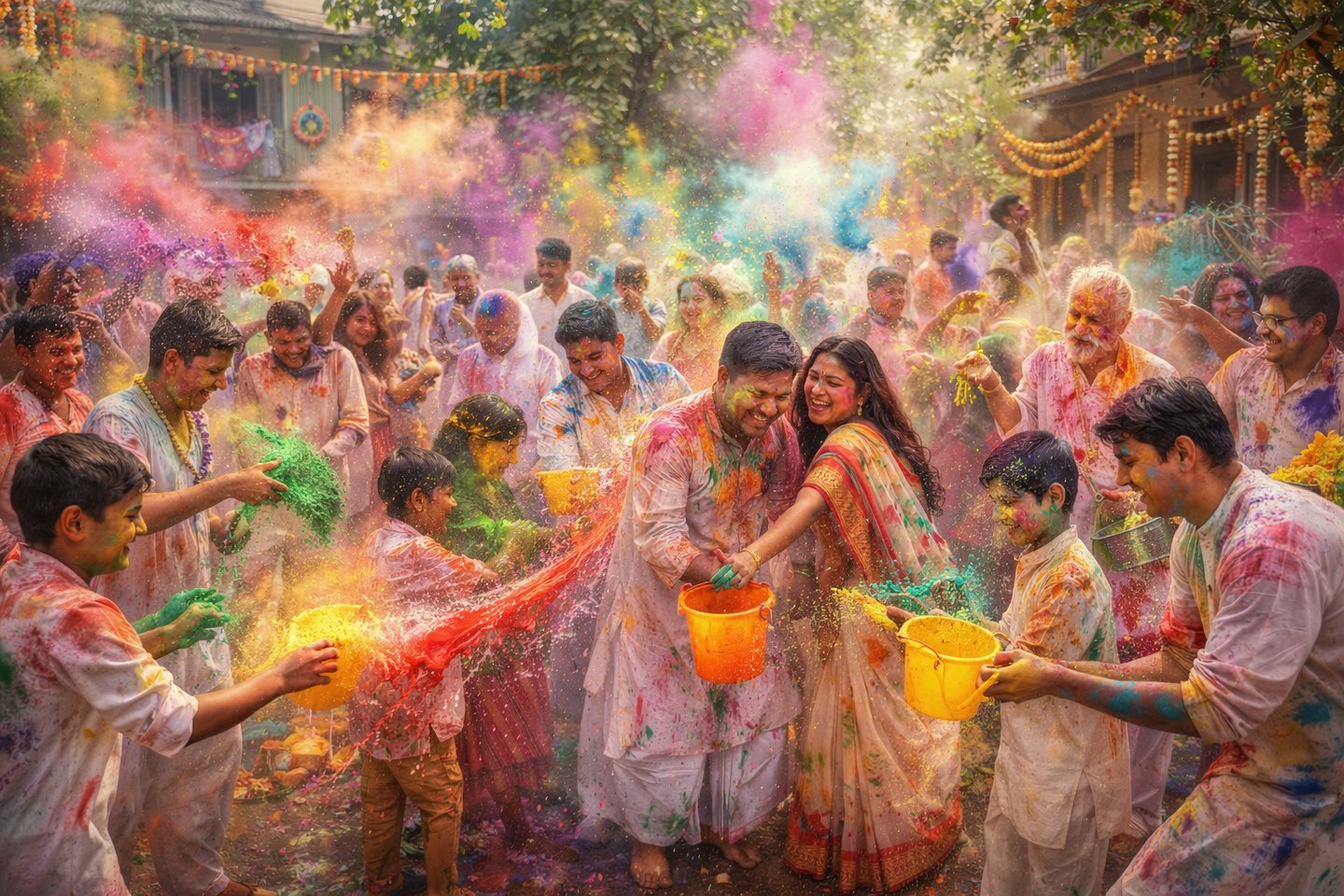
Throwing colored powder (gulal) and water, playfully smearing colors on everyone
🎵Songs & Music
Traditional folk songs and devotional music fill the air throughout the day
🍬Feasting & Joy
Sharing sweets, preparing traditional dishes, and distributing gifts among loved ones
A Tapestry Across Bharat
The beauty of Dol Yatra lies in its diverse expressions across different regions of Bharat. Each culture has woven its own thread into this grand tapestry of celebration, creating variations that reflect local traditions while honoring the universal spirit of the festival.
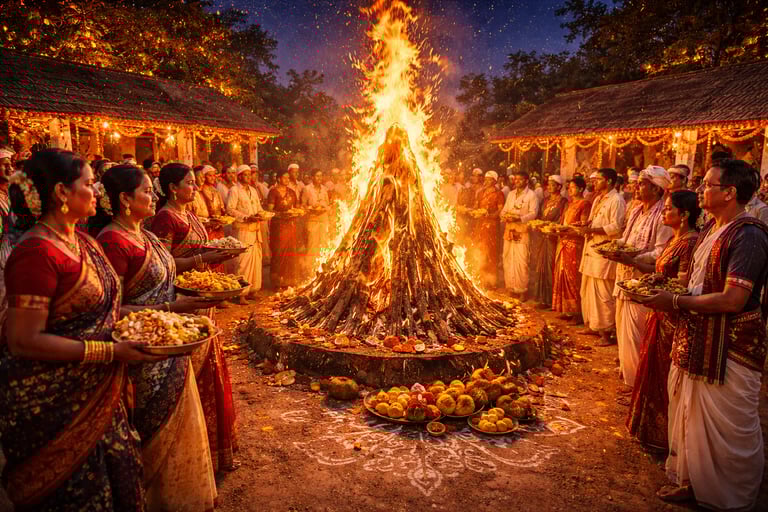
In Bengal, Dol Yatra is celebrated with elaborate swinging rituals in temples, while people gather in parks wearing yellow (the color of spring) to play Holi. In Odisha, the festival takes the form of "Dol Purnima," where temple processions showcase the divine couple swinging in grand ceremonial splendor. Across the heartland, Holi bonfires symbolize the burning of negativity, while the colors thrown represent the diversity and vibrancy of life itself.
Bengal
"Basant Utsav" - Celebrations with yellow attire and kites filling the sky
Assam
"Holi Bihu" - New year celebrations with traditional music and dance
Odisha
"Dol Purnima" - Grand swinging ceremonies at temples
North India
"Holi" - The festival of colors with bonfires and unity
South India
"Vasantotsav" - Spring festival with special rituals and offerings
Sacred Rituals & Spiritual Significance
Every ritual of Dol Yatra carries profound spiritual meaning. The flowers adorning the swing represent the beauty of devotion, while the bells symbolize the divine call that awakens the soul. The swinging motion itself is not merely a mechanical act—it is a meditation, a form of worship that connects the devotee directly to the divine. The throwing of colors carries its own spiritual essence.
The colors—red for valor, blue for infinity, yellow for joy, green for renewal, and white for purity—together create a mandala of human emotions and divine blessings. When colors blend on the body, they represent the unity of all beings, the erasure of distinctions of caste, creed, and class.
The Act of Swinging: Each swing is a prayer, each movement a gesture of love and devotion. As the swing goes higher and higher, it symbolizes the soul's ascent toward the divine, transcending earthly limitations.
🙏Devotion
The surrender of ego to divine love
🌈Unity
Breaking barriers through colors and joy
💫Transformation
The soul's journey toward enlightenment
Dol Yatra in the Modern Age
While the essence of Dol Yatra remains eternal, its expressions have evolved with time. In cities across Bharat and beyond, the festival bridges ancient wisdom with contemporary life. Schools organize cultural programs where children learn the stories of Radha and Krishna through dance and drama. Art exhibitions showcase traditional and modern interpretations of the festival's themes.
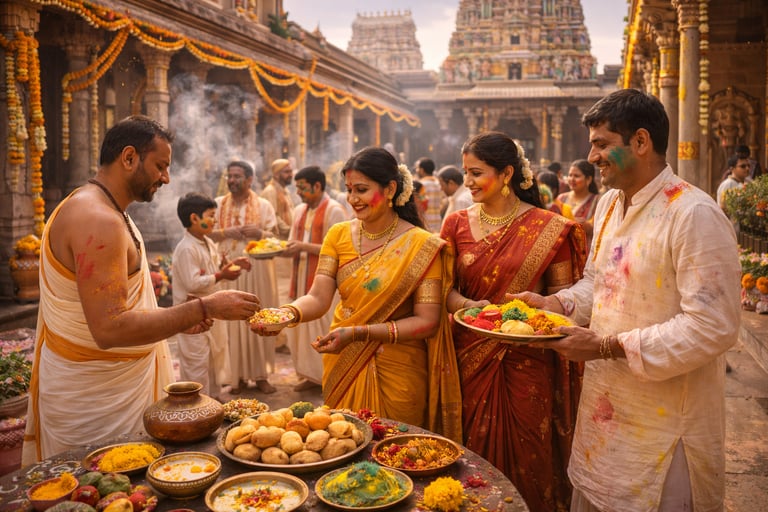
Yet, in villages and towns, the traditions remain largely unchanged. Families still wake early, prepare the traditional swings, gather around temples, and celebrate with colors and music. The festival has become a symbol of Bharat's cultural continuity—a living bridge between past and present, connecting each generation to the wisdom of the ancients.
Dol Yatra serves as a reminder that even in our fast-paced, technology-driven world, the ancient values of love, devotion, and community remain eternally relevant. As the colors bloom and the swings sway, each participant becomes part of a story thousands of years old—a story that continues to unfold with each spring.
👨👩👧👦Family Bonds
Strengthening connections through celebration
🌍Global Impact
Spreading Bharat's culture worldwide
🔄Continuity
Bridging past, present, and future