
Dhritarashtra: The King, The Conflict, The Cost of Silence
Dhritarashtra’s story in the Mahabharata teaches how attachment, hesitation, and unexamined love can shape destiny and influence the course of Dharma. A visual story by The Author Factory
CULTURAL VISUAL STORYTELLING
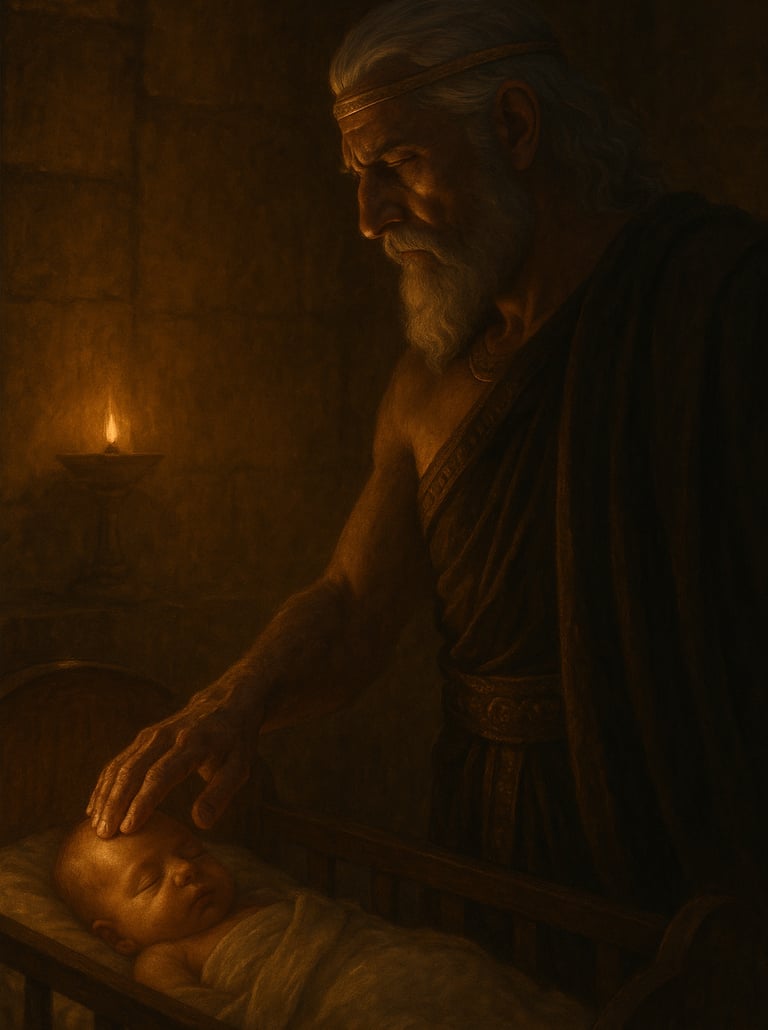
He was born into the house of Kuru as an heir, yet fate veiled his eyes at birth. Dhritarashtra entered the world without sight, and with that blindness came a destiny shaped by restraint and denial. Though elder by right, the throne passed beyond his grasp, and he was made a king in name but not in command. From his earliest days, he learned to listen more than to see, to feel the weight of power without ever fully holding it.
2. The Throne Lost, The Wound Formed
Though the rightful heir, Dhritarashtra was denied the throne and watched his younger brother Pandu become king. He accepted this publicly but fractured privately. That unhealed rejection turned into quiet resentment, slowly influencing his choices, relationships, and ability to rule without bias.
Life Lesson:
Unhealed rejection quietly turns into lifelong bitterness.
Losing what feels rightfully ours can wound the soul. When pain is swallowed instead of healed, it reshapes character and clouds judgment for years to come.
Dhritarashtra’s blindness was not of the eyes alone. It was the sorrow of a man who knew the crown was his by birth, yet forbidden by law and custom. This quiet grief settled deep within him, turning longing into attachment and affection into indulgence. Where justice demanded firmness, his heart sought comfort. Where Dharma required distance, he clung to blood.
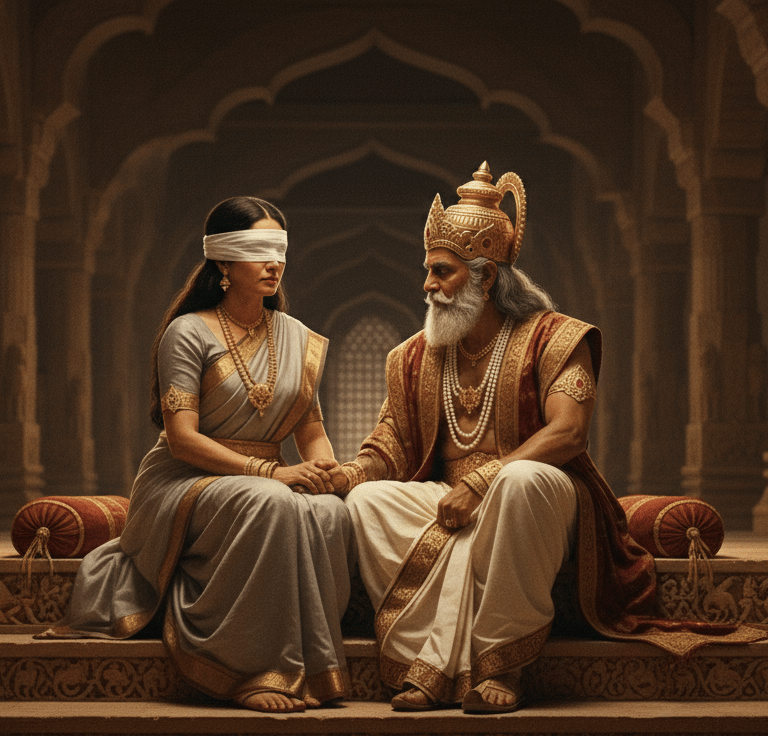
In Gandhari, he found a queen whose devotion matched his suffering. Her choice to bind her own eyes became both solace and mirror to his fate. Together, they ruled a kingdom where the king heard all and saw none. Yet it was through his sons that Dhritarashtra’s inner conflict revealed itself most clearly. His love for them was fierce, consuming, and without measure. It softened his judgment and bent his will, until affection overshadowed righteousness.
3. Love, Family, and the Seeds of Obsession
Gandhari chose blindness out of devotion, becoming Dhritarashtra’s emotional anchor. Together they raised a vast family, but Dhritarashtra poured his unrealized dreams into Duryodhana. What began as parental love slowly became favoritism, feeding jealousy, entitlement, and ambition.
Life Lesson:
Love that abandons balance can unknowingly nurture obsession.
Gandhari’s devotion was pure, but Dhritarashtra’s unresolved insecurity found shelter in it. Love should strengthen truth, not protect our unexamined fears.
4. Silence That Destroyed a Kingdom
As Shakuni schemed and Vidura warned, Dhritarashtra sensed injustice but chose silence—most fatally during the dice game. He heard Draupadi’s humiliation and knew it was wrong, yet remained still, torn between kingly duty and fatherly attachment. That silence set the stage for war.
Life Lesson:
Knowing what is right is meaningless without the courage to act.
Dhritarashtra understood justice, sensed danger, and foresaw disaster — yet chose silence. Awareness without action slowly becomes complicity.
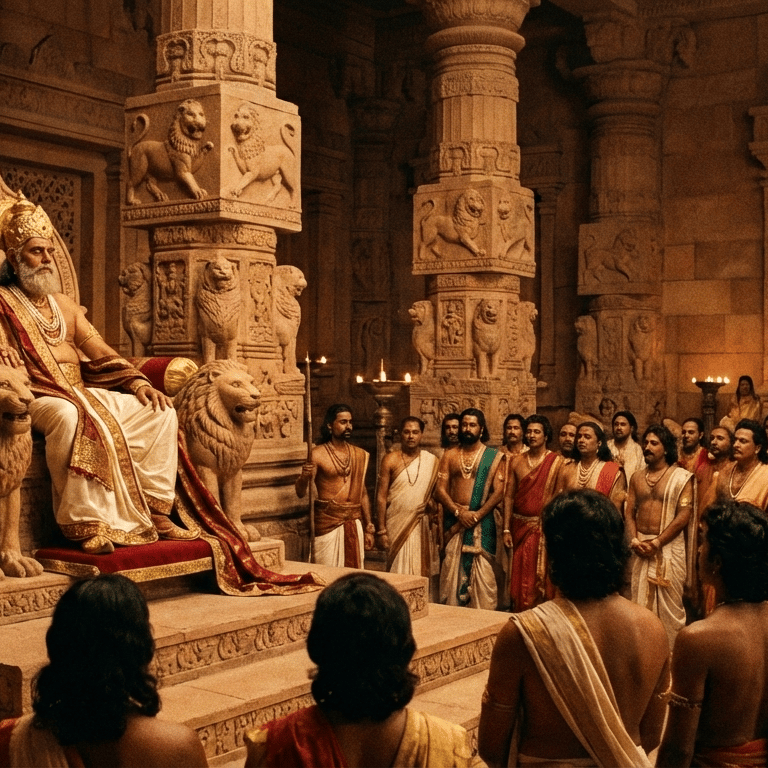
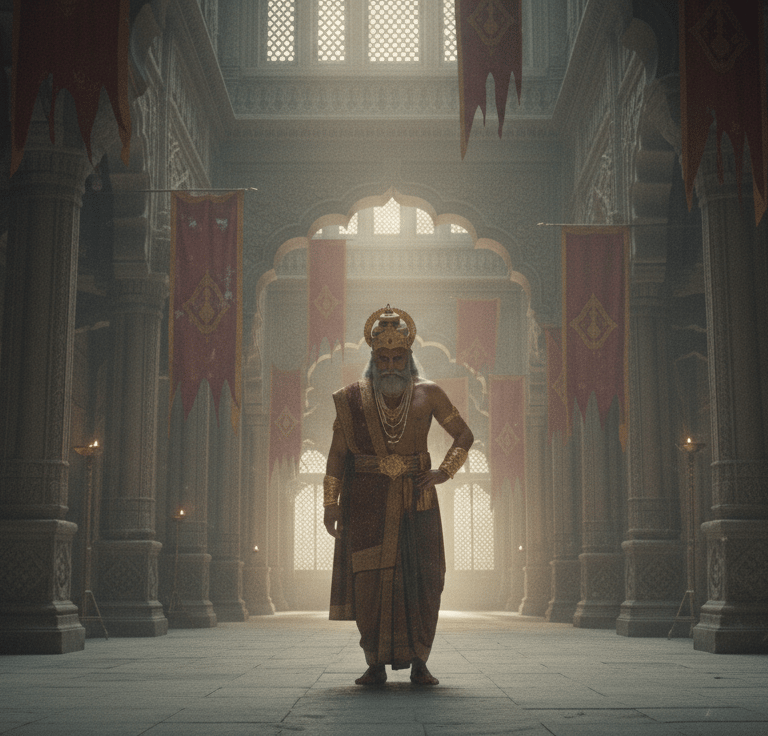
Though seated upon the throne of Hastinapura, Dhritarashtra ruled by hesitation. He knew the path of Dharma, heard its call spoken by elders and counselors, yet lacked the strength to enforce it when it stood against his sons. Thus did injustice grow not through command, but through silence. His failing was not cruelty, but weakness — a weakness born of fear, attachment, and unfulfilled desire.
5. War, Loss, and the Truth Accepted Too Late
The Kurukshetra War unfolded through Sanjaya’s words alone. Dhritarashtra lost his sons, his lineage, and his kingdom. Only then did he confront the truth he had avoided—that he had strength and authority but never used them when it mattered. His life ended in retreat, reflection, and finally, acceptance.
Final Life Lesson:
Inner blindness is more dangerous than physical blindness.
Dhritarashtra’s tragedy was never his lack of sight —
it was his refusal to confront fear, favor truth over attachment, and act when destiny asked him to choose.
When the great war arose, Dhritarashtra did not behold the field of Kurukshetra with his eyes, but through the words of Sanjaya, to whom divine sight was granted. Each tale of fallen warriors, each cry of death and valor, pierced him deeper than any weapon. In hearing the destruction of his lineage unfold, the king tasted the bitter fruit of choices long delayed.
At the war’s end, bereft of sons and stripped of pride, Dhritarashtra stood face to face with truth. The darkness he had lived within now consumed his world. Power, lineage, and throne slipped away, leaving only remembrance and regret. In renunciation, he turned to the forest, seeking peace where the palace had offered none.
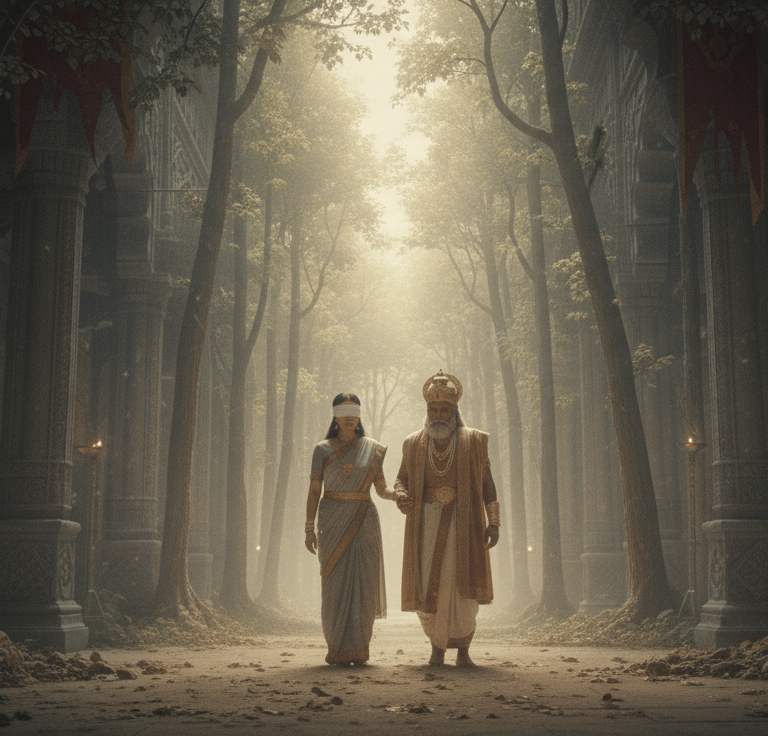
Dhritarashtra is not remembered as a tyrant, nor as a just king.
He is remembered as a warning.
That love without restraint clouds judgment.
That power without courage breeds ruin.
And that blindness of the soul may wound a kingdom more deeply
than blindness of the eyes ever could.
1. Born Into Darkness, Marked by Destiny
Dhritarashtra was born blind in the palace of Hastinapura, a prince of the Kuru dynasty whose arrival was met with fear rather than celebration. Guided by Bhishma’s words, his life unfolded in silence, longing, and unseen struggles. His blindness did not weaken his mind, but it shaped how the world judged him—and how he judged himself.
Life Lesson
Circumstances shape us, but they do not define our destiny.
Dhritarashtra was born into limitation, not failure. Life often begins unfairly, but the true tragedy is not what we are given — it is what we believe we cannot become because of it.