
Bhishma Pitamaha: The Man, The Myth, The Moral Compass
Step into the visual universe of Bhishma Pitamaha: the grand guardian of the Mahabharata. Through The Author Factory’s cinematic frames, experience his vows, emotions, and inner conflicts that redefine what it means to live by truth and duty.
CULTURAL VISUAL STORYTELLING
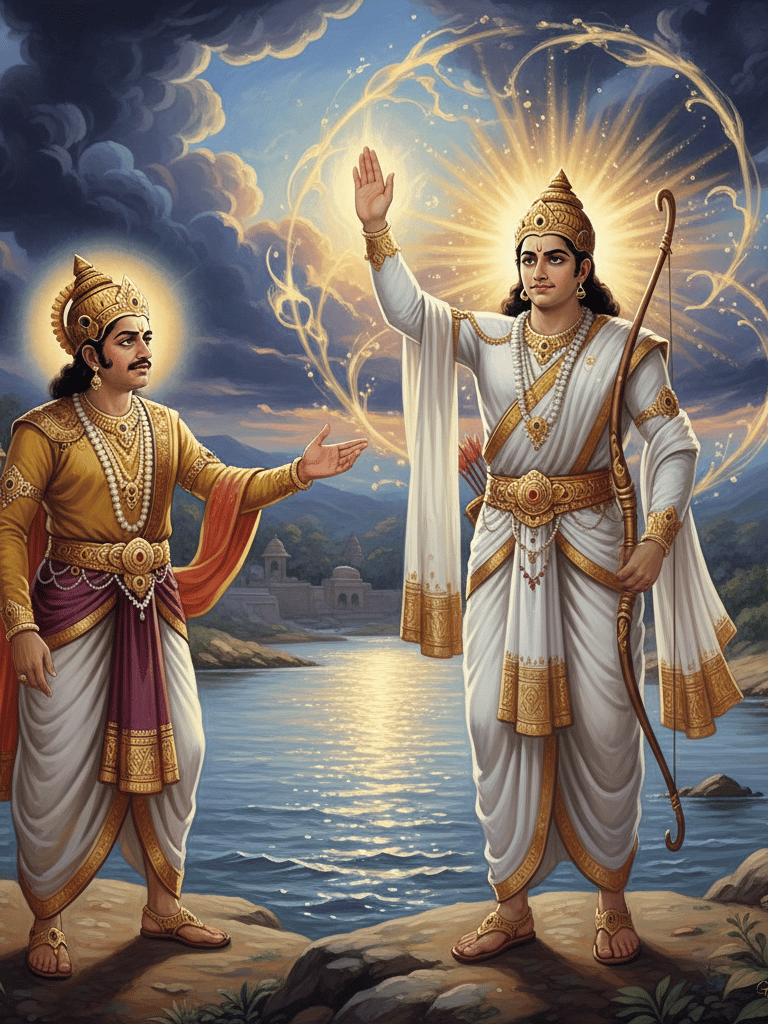
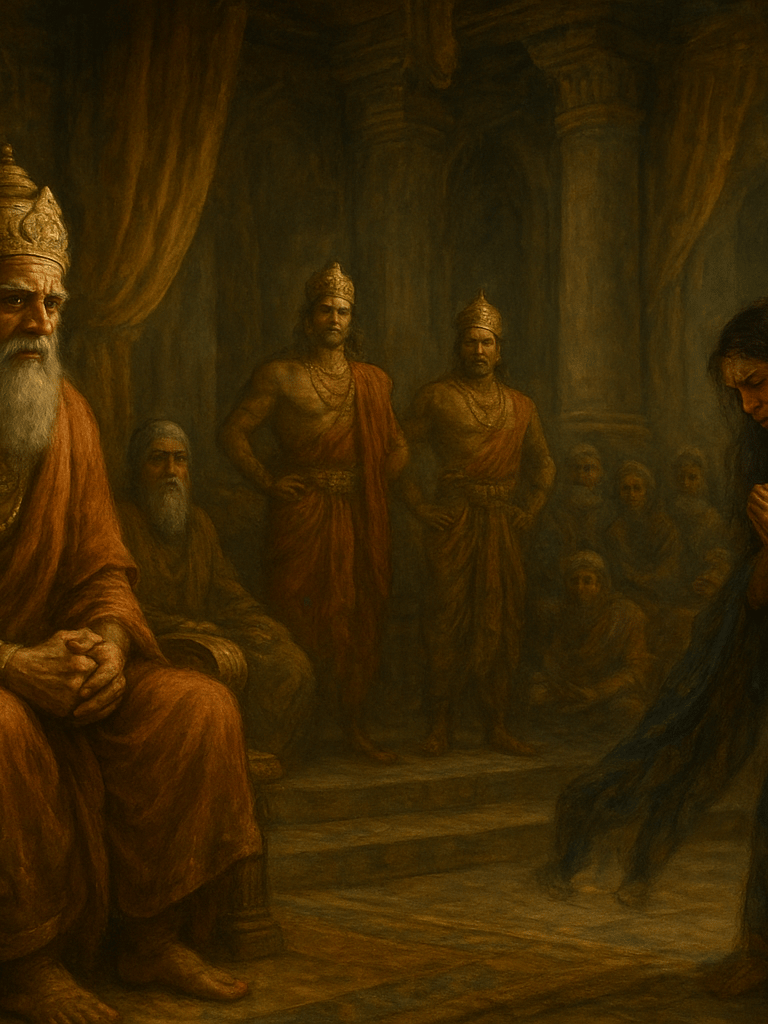
1. Dharma vs. Adharma — The Eternal Crossroad
Bhishma’s devotion to Hastinapur compelled him to defend the Kauravas — even when his heart knew the path of righteousness lay elsewhere.
Lesson: True strength lies not in allegiance, but in discernment. One must always stand with justice, for silence in the face of wrong weakens even the mightiest soul.
2. The Sacred Power of Oath & Commitment
Bhishma earned his name through an unbreakable promise — the Bhishma Pratigya. To fulfill his father’s happiness, he gave up the throne and a life of personal joy, choosing the path of lifelong service and celibacy.
Lesson: The power of a vow defines the purity of one’s spirit. Staying steadfast to your word, even when the road is rough, is the mark of true honor.
3. Mastery of the Self
Bhishma conquered not kingdoms, but himself. His control over emotion and desire became his greatest weapon. Even in pain, he remained poised — choosing the divine moment (Uttarayana) to embrace release.
Lesson: The highest victory is over the mind. When one governs their emotions with wisdom, clarity, and peace — they embody true power.
4. Harmony of Free Will and Destiny
Blessed with the boon of Ichha Mrityu — the freedom to choose the time of his death — Bhishma stood as a bridge between fate and will. He accepted destiny, yet never stopped choosing righteousness within it.
Lesson: Life is a sacred balance between what we can shape and what we must accept. Strength lies in acting with awareness, even when destiny unfolds its plan.
5. The Legacy of Wisdom
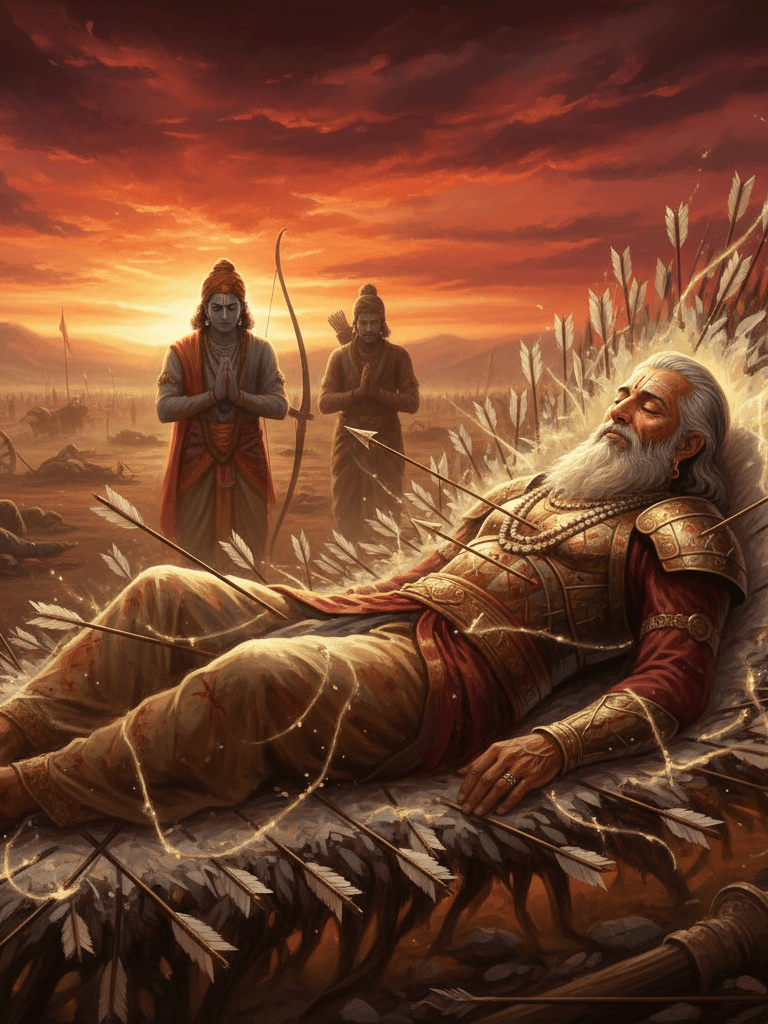
Even as he lay on the bed of arrows, Bhishma’s voice became a fountain of timeless guidance. His teachings on dharma, leadership, and virtue shaped Yudhishthira — and through him, the future of Hastinapur.
Lesson: What endures beyond life is not struggle, but wisdom. One’s true legacy is the knowledge and values they leave for those who follow.
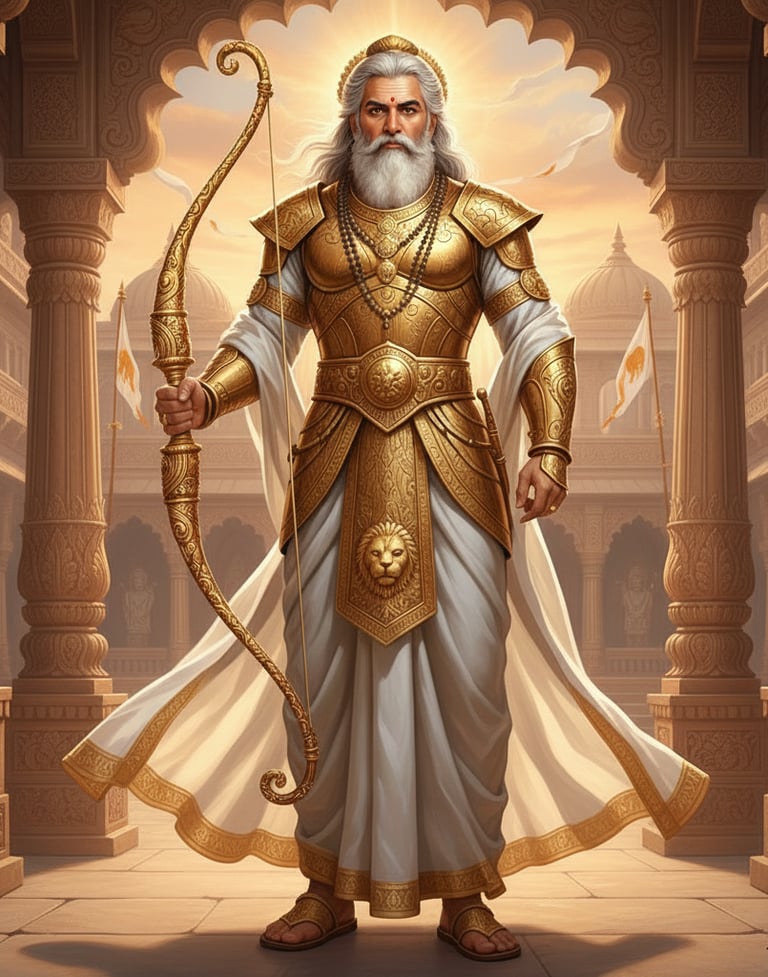
Devavrata, a prince born of the river’s blessing and raised in the house of kings. From his earliest days, he bore the stillness of one destined for restraint. Devavrata walked the path of discipline, guided by reverence for elders, devotion to truth, and obedience to the sacred order that governs all beings.
The turning of his fate came not upon a battlefield, but before the fire of promise. To fulfill his father’s desire and preserve the peace of the kingdom, Devavrata renounced the throne and the hope of progeny. With that single oath, terrible in its power, he became Bhishma — one whose word could not be broken, one whose life was bound to sacrifice. The gods themselves bore witness, and the earth trembled beneath the weight of his resolve.
Yet the very vow that crowned him with honor became the chain that bound his silence. He beheld adharma grow within the royal house, saw injustice clothed in power, and witnessed kin turn against kin. His heart knew the truth, but his tongue remained still, for his oath stood above all worldly judgment. Thus did Bhishma suffer the torment of righteousness restrained by obedience.
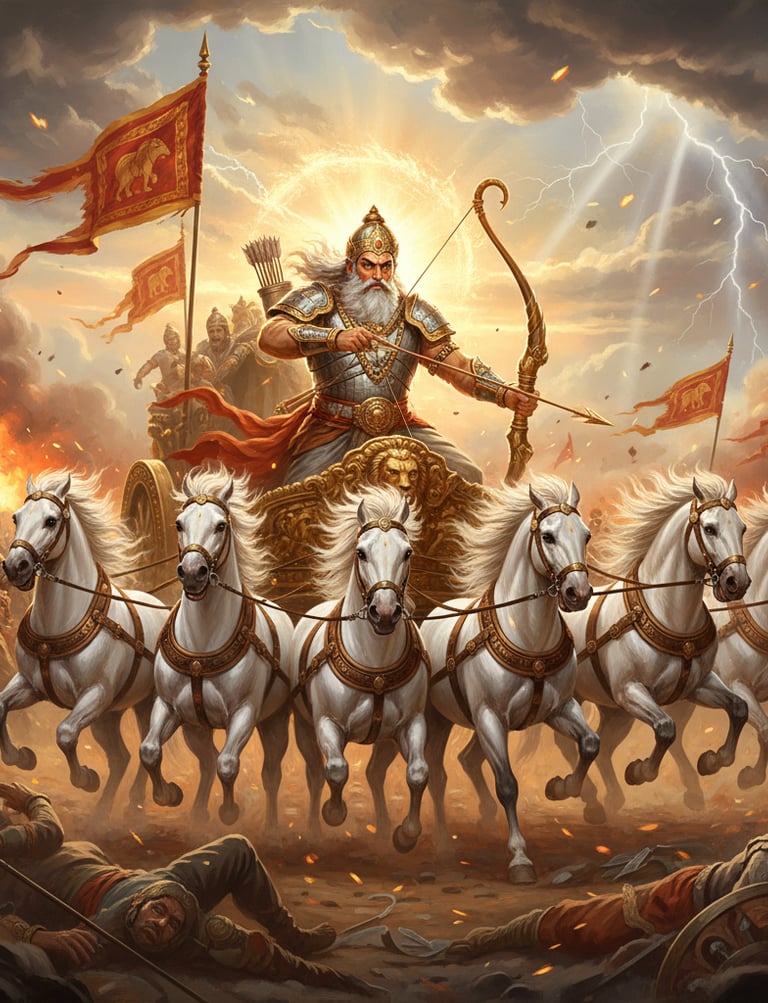
When the great war arose, Bhishma took up arms not for hatred, but for duty alone. Upon the field of Kurukshetra, no warrior equaled his might. Weapons fell before him, and heroes trembled in his presence. Yet he fought without desire for victory, knowing well the doom that awaited the house he defended. His valor was guided by sorrow, and his strength by resignation.
At last, pierced by countless arrows, Bhishma lay upon the bed of shafts, neither living nor dead. Gifted with mastery over his final breath, he waited for the auspicious hour, teaching wisdom even as his blood fed the earth. Thus he departed, not as a conqueror, but as a witness — one who bore the burden of Dharma to its furthest end.
Bhishma is remembered not for triumph, but for renunciation.
Not for command, but for obedience.
His life stands as a solemn teaching:
that vows, once taken, shape destiny —
and that even the noblest oath can bind the soul in suffering when compassion is denied its voice.