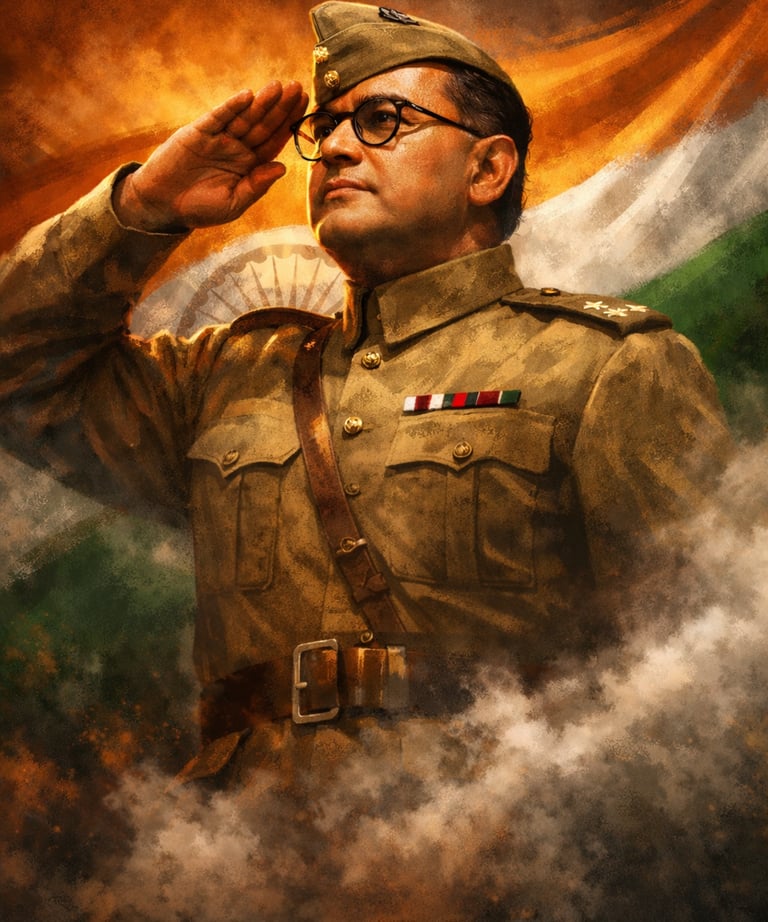
23rd January (Parakram Diwas): A Visual Story of India’s Independence Movement
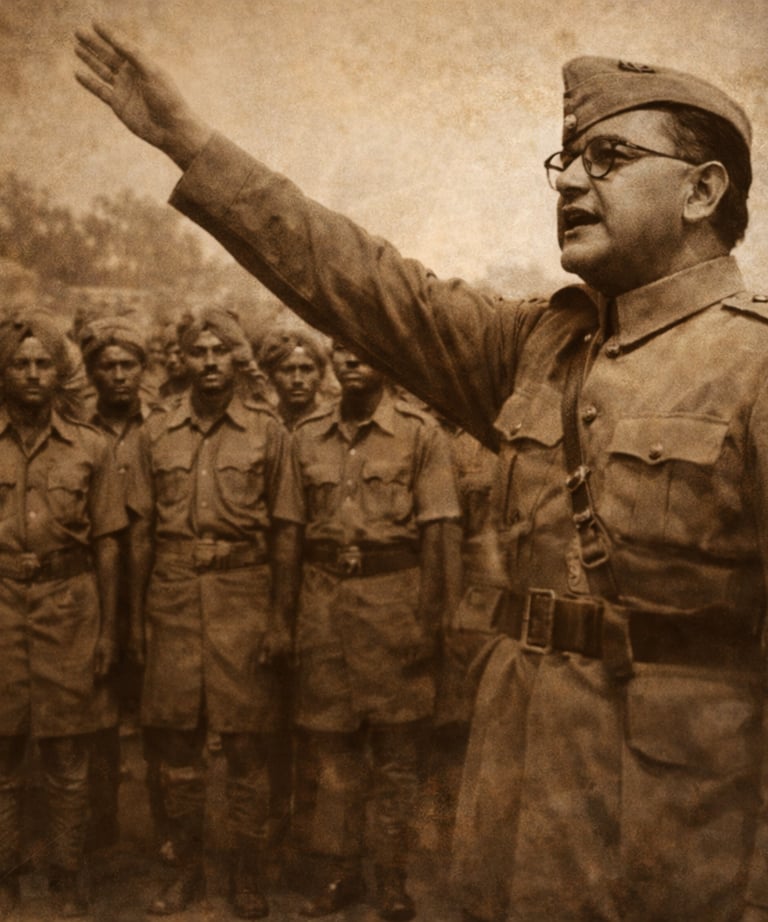
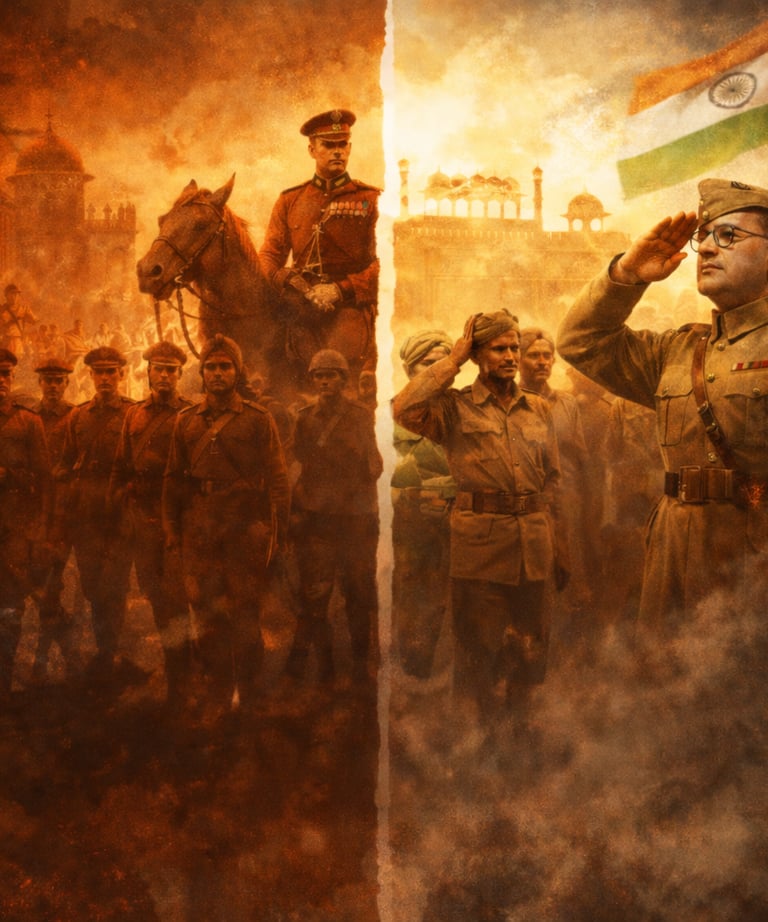
Experience the story of Azad Hind Fauj and India’s freedom movement through a cinematic visual narrative, published in remembrance of Parakram Diwas. From Netaji Subhas Chandra Bose’s leadership to the spirit of independence, this visual story brings history to life.
CHRONICLES OF BHARAT
A Visionary Is Born
On the 23rd of January 1897, in Cuttack, Odisha, a child was born whose defiance would echo through the corridors of history. Subhash Chandra Bose entered a world under colonial rule, but he carried within him a fire that would refuse to be extinguished.
From his earliest days, Netaji embodied an unshakeable belief: independence wasn't a distant dream—it was an inevitable destiny. While others spoke of patience, he spoke of action. While others whispered, he roared.
The Call to Arms
"Tum mujhe khoon do, main tumhe Azadi dunga"
— "Give me blood, I shall give you freedom"
These weren't mere words—they were a battle cry that awakened a sleeping nation. Netaji understood something fundamental: a people could only be free if they were willing to fight for it. Freedom wasn't a petition to be granted; it was a right to be seized.
His philosophy rejected the gradual approach. He believed in direct action, bold strategy, and unwavering determination. Where others saw obstacles, Netaji saw opportunities. Where others retreated, he advanced.
The Indian National Army
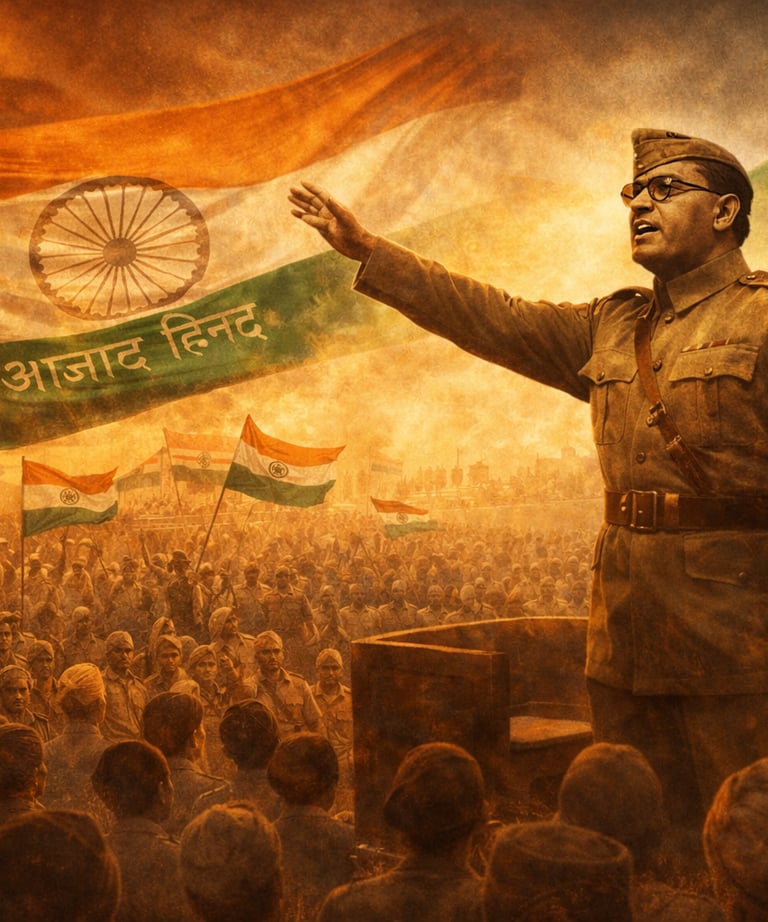
In 1943, Netaji did the unthinkable. He founded the Indian National Army (INA)—a military force dedicated to liberating India through armed struggle. Under his visionary leadership, soldiers from across the country united with a singular purpose: to drive out the British and establish an independent nation.
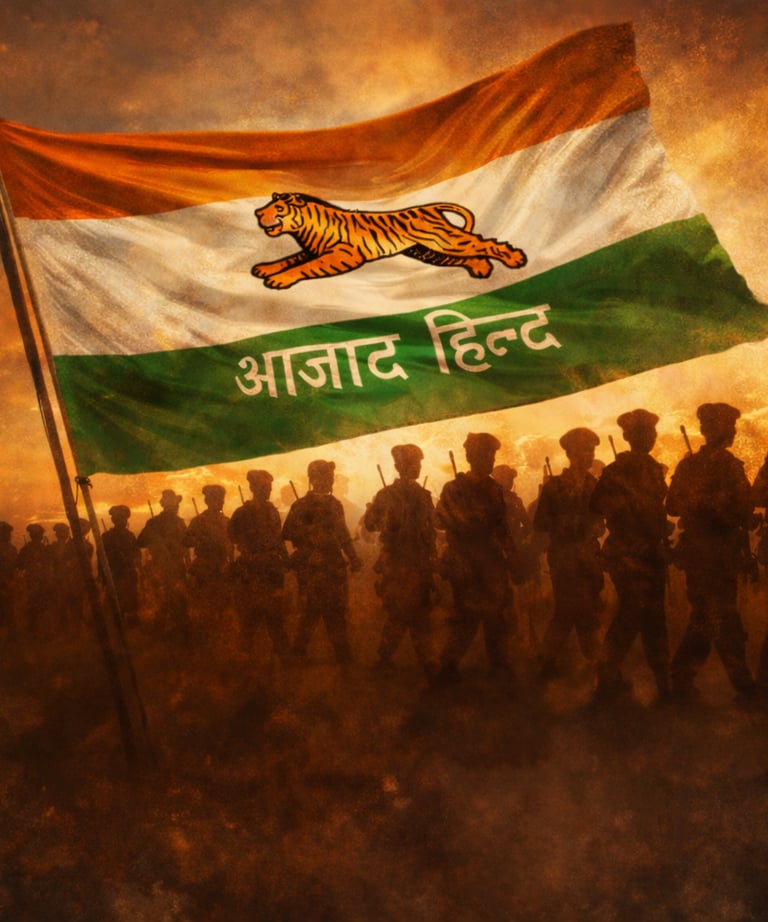
The flag of Azad Hind (Free India) was unfurled—not in boardrooms or political circles, but on battlefields where brave men and women stood ready to sacrifice everything. The Azad Hind Government of 1943 was more than an administration; it was a symbol of India's unbreakable will.
The Indian National Army
In 1943, Netaji did the unthinkable. He founded the Indian National Army (INA)—a military force dedicated to liberating India through armed struggle. Under his visionary leadership, soldiers from across the country united with a singular purpose: to drive out the British and establish an independent nation.
The flag of Azad Hind (Free India) was unfurled—not in boardrooms or political circles, but on battlefields where brave men and women stood ready to sacrifice everything. The Azad Hind Government of 1943 was more than an administration; it was a symbol of India's unbreakable will.
His Courage Inspired a Nation
His leadership united millions. From soldiers to civilians, from the young to the old, people saw in Netaji a leader who truly believed in the cause. He didn't send others to fight—he led from the front. He didn't promise easy victory—he promised certain sacrifice.
The Indian National Army's struggle became a turning point. It showed the British that India could not be held indefinitely. More importantly, it showed the Indian people that freedom was within their grasp if they had the courage to reach for it.
His sacrifice secured our freedom—not through his continued presence, but through the eternal inspiration he left behind.
Forever in Our Hearts
Today, as we celebrate Parakram Diwas 2026—the 129th birth anniversary of Netaji Subhash Chandra Bose—we are reminded that true freedom is never free. It is earned through sacrifice, secured through courage, and preserved through the eternal vigilance of grateful hearts.
The India we live in today stands as a living testament to his vision. Every free breath we take, every choice we make, every opportunity we enjoy—these are the fruits of seeds planted by Netaji and nurtured by countless patriots.
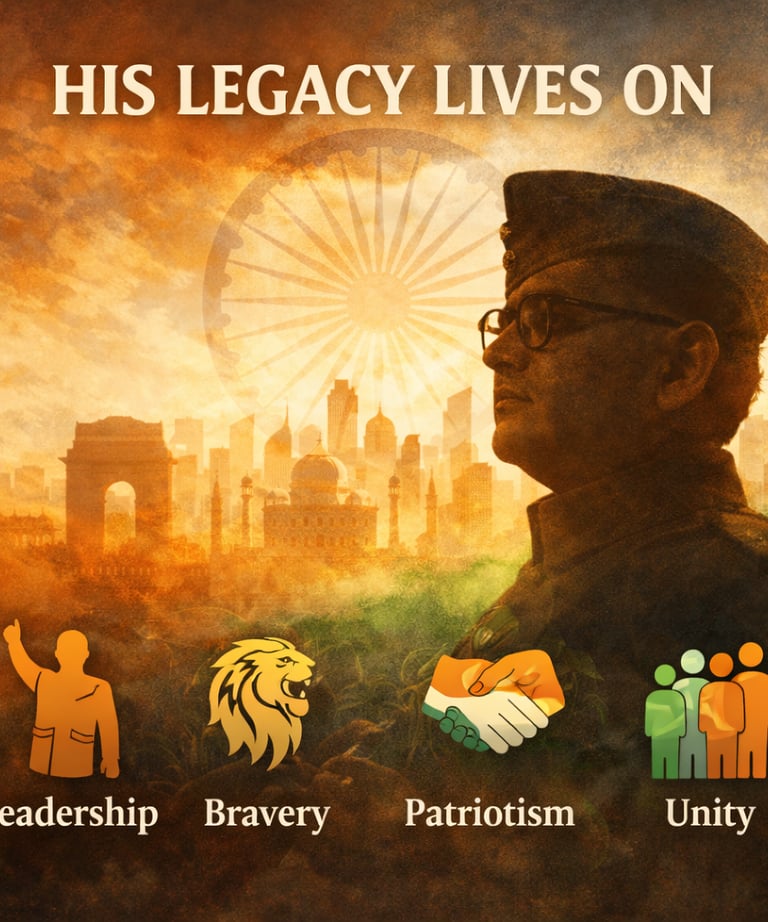
His legacy is not written in books alone. It pulses through the veins of every Indian who believes in the promise of our nation.
Jai Hind!